

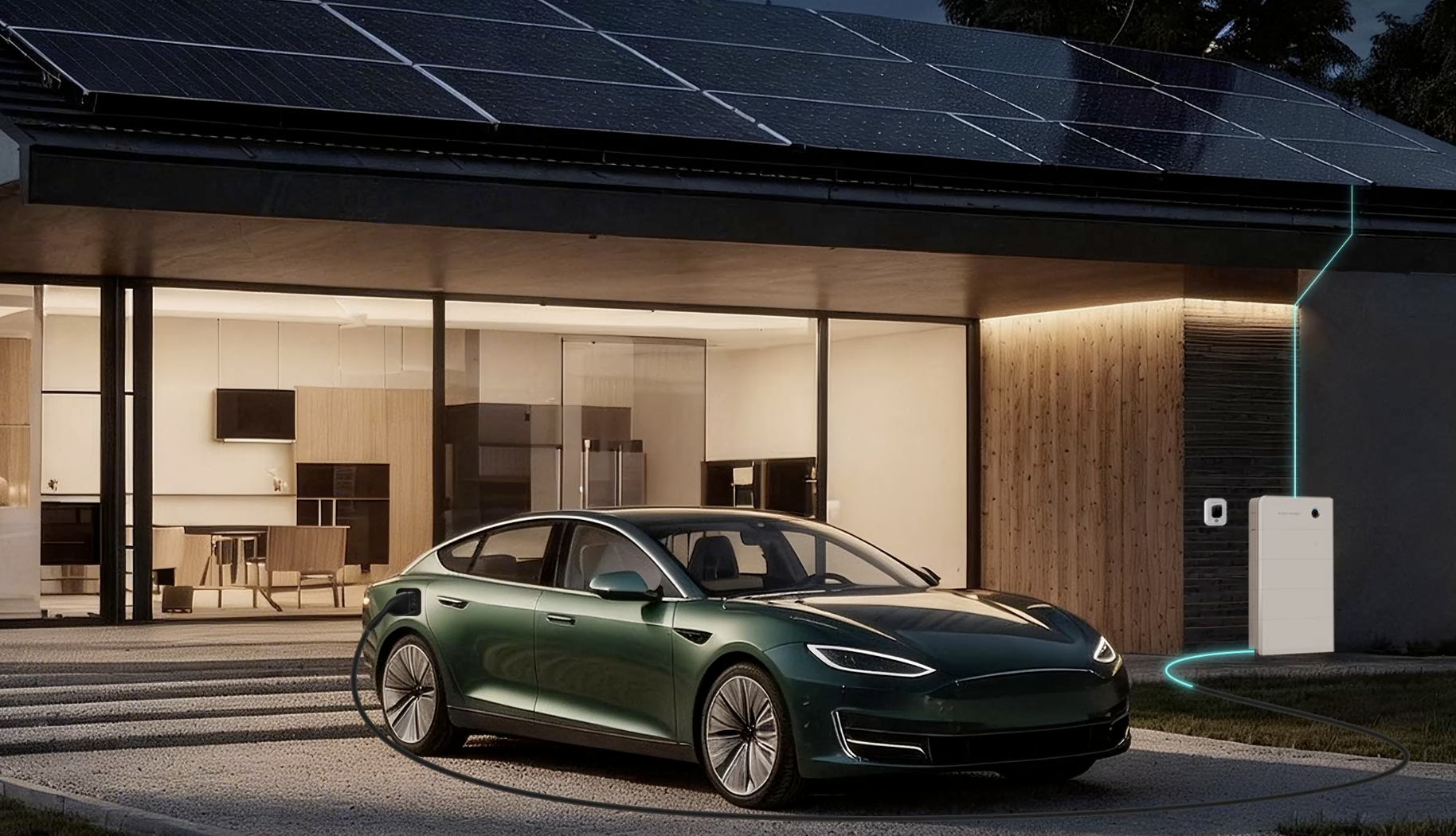
An EV can turn a tidy solar project into a much bigger energy puzzle. The car may sit in the driveway with a battery larger than the home battery on the wall. It may charge at night, during peak rates, or whenever someone remembers to plug it in.
That is why the best solar battery setup for an EV home is not just a bigger battery. It is a system that understands solar production, household loads, charging speed, and backup priorities.
EV charging changes the load profile
The U.S. Department of Energy’s Alternative Fuels Data Center says AC Level 2 charging provides roughly 25 miles of range per hour of charging, with equipment that can range from 2.9 to 19.2 kW. That is a meaningful load for a house.
A 7.2 kW Level 2 charger can draw more power than many household appliances. An 11.5 kW charger can pull even harder. If it runs during evening peak rates, it may increase the bill at exactly the wrong time. If it runs during a grid outage, it can drain backup storage quickly.
So the key question becomes: should the EV be treated as another appliance, or as part of the home’s energy strategy?
Solar, storage, and charging need a traffic controller
A good solar battery setup has three jobs. First, it should store excess solar that would otherwise be exported. Second, it should support the home during expensive hours or outages. Third, it should charge the EV intelligently without starving the house.
This requires an energy management system, often shortened to EMS. The EMS monitors production, consumption, storage, and charging so the system can decide where electricity should go.
SigenStor is designed as a 5-in-1 system that combines solar inverter, EV DC charger, battery PCS, battery pack, and EMS. For EV households, SigenStor EV DC extends that architecture with 25 kW bidirectional DC charging capability.
DC charging matters because EV batteries store direct current. A DC-coupled charging path can reduce unnecessary conversion steps when solar and battery power are also moving through a DC architecture.
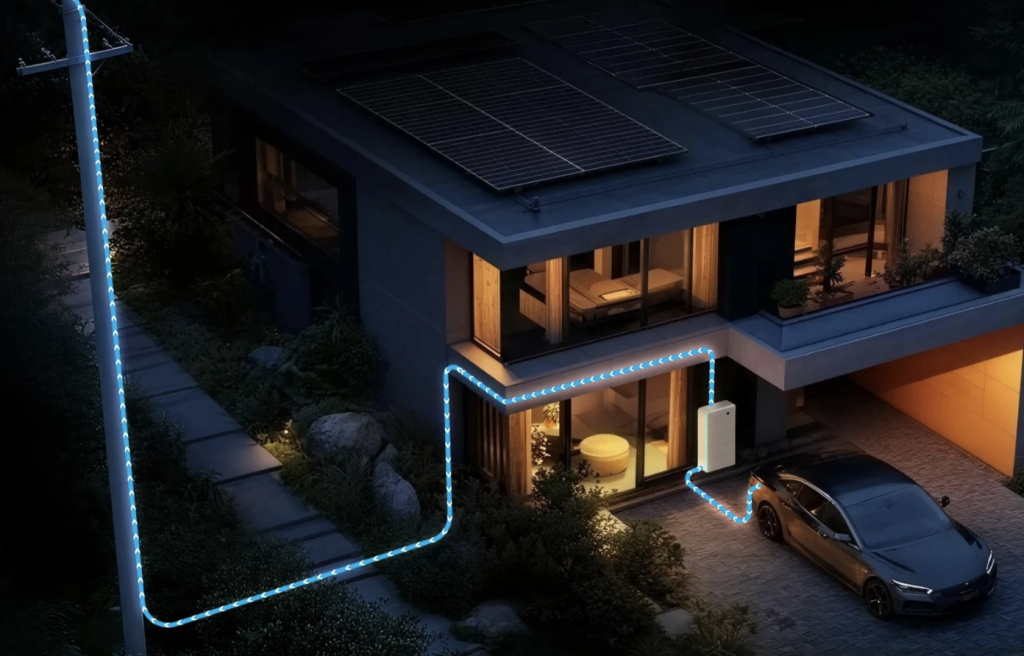
The V2H question
V2H, or vehicle-to-home, allows an EV to supply electricity back to a house during an outage or high-rate period. V2G, or vehicle-to-grid, sends power back to the utility grid when local programs allow it. V2X is the broader term for vehicle-to-home, vehicle-to-grid, and related uses.
These ideas are gaining attention because EV batteries are large. Many EVs carry more stored energy than a typical residential wall battery. But compatibility depends on the vehicle, charger, utility rules, and standards.
IEEE research on vehicle-to-grid systems has consistently treated EVs as potential distributed energy resources, not just transportation devices. Still, practical rollout depends on hardware and software that can manage both driving needs and home energy needs.
A cleaner way to size the system
Instead of asking, «How big should the battery be?» start with four scenarios:
| Scenario | Design question |
| Sunny weekday | Should solar charge the EV or fill the home battery first? |
| Evening peak | Should the home battery discharge while EV charging pauses? |
| Short outage | Should EV charging stop automatically? |
| Long outage | Can solar recharge both home storage and selected EV needs? |
These answers shape the equipment choice more than any single battery number.
A mySigen App energy management layer gives homeowners a more future-ready path because the EV can become part of the home’s energy plan when vehicle support and local rules allow it. Paired with bidirectional charging, the system can show energy flows and help users avoid blind charging during expensive or fragile periods.
The best setup for an EV home is not the largest one on paper. It is the one that keeps solar, storage, charging, and backup from fighting each other.
